
Opportunities
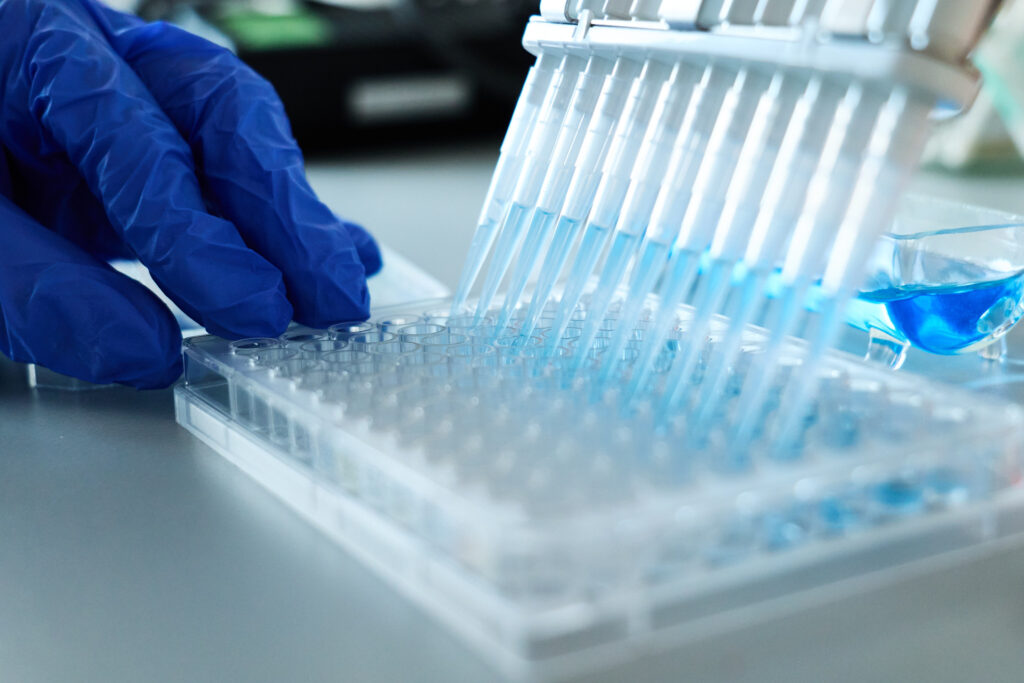
We offer elaborating bachelor/diploma/dissertation theses in the field of microbiology, biochemistry and protein engineering. Contact us with a CV and a motivation letter if you want to become our team member, as a MSc. or PhD. student or a postdoc.
Contact us with a CV and a motivation letter.
1. Detailed characterization of the functions and roles of selected enzymes in the biosynthesis of bioactive metabolites incorporating alkylproline derivatives
2. Search for new drugs: Activation of silent pathways for biosynthesis of natural bioactive compounds (possible even for PhD)
3. Bioactive metabolites containing a new type of building unit discovered by bioinformatic analysis of genomic databases. (possible even for PhD)
4. Derivatization and Spectral Library Construction for Polar Metabolites in LC-MS-Based Metabolomics
- More information+ contacts in the section below
- Or if have different idea for your topic contact us with a CV and a motivation letter 🙂
1. Search for new drugs: Activation of silent pathways for biosynthesis of natural bioactive compounds (possible even for MSc.)
2. Bioactive metabolites containing a new type of building unit discovered by bioinformatic analysis of genomic databases. (possible even for MSc.)
3. Decoding Antibiotic Resistance: The Mechanism of mRNA-Dependent ABCF-Mediated Translation Rescue
- More information+ contacts in the section below
- Or if have different idea for your topic contact us with a CV and a motivation letter 🙂
This diploma thesis presents an exciting opportunity to join our research group’s quest to uncover the biosynthesis of alkylproline derivatives, unusual building blocks for a wide range of potent specialized metabolites with exceptional biological activities. These compounds, like the antibiotic lincomycin and antitumor agents pyrrolobenzodiazepines, owe their biological power to the unique alkylproline unit they contain. While we’ve made significant progress in understanding how alkylproline is formed, two key aspects of this biosynthetic pathway remain unclear, and each has a critical influence on the bioactivity of the final metabolite: the creation of a specific stereocenter and F420H2-dependent reduction, both which determines the molecule’s unique shape This multidisciplinary work will encompass classical microbiology techniques, cloning, site-directed mutagenesis, protein overexpression and purification, enzymatic assays, as well as liquid chromatography and mass spectrometry.
If you are interested contact Lucie Zdvořáková; lucie.zdvorakova@biomed.cas.cz
Actinomycetes are bacteria present mainly in soil, they are rich source of various bioactive compounds e.g. streptomycin, tetracyclin, vancomycin. The boom in genome sequencing in the last decade revealed that these microorganisms can produce up to tens of diverse compounds. Their biosynthetic pathways are often not active under the traditional cultivation conditions and their products thus frequently remain unknown. In our laboratory, we have collection of actinomycetes isolated from various soil and marine samples in many locations around the world. Genome sequence of many of these organism is already available and we have already selected several interesting „silent“ biosynthetic pathways. The aim of the work is to employ currently available and newly arising techniques including mainly manipulation of regulation of the biosynthetic pathways in order to activate these pathways, isolate the produced metabolite and describe its structure and bioactivity. Based on the structure of the compound, the work can continue to predict and experimentaly verify biosynthetic steps and study structure and function of interesting enzymes. According to scope and focus of the work, experimental methods can include e.g. cultivation of microorganisms, LC-MS techniques, methods of isolation and manipulation of DNA, genome sequencing, bioinformatics, bioactivity assays of new compounds, isolation and purification of proteins, protein crystallization and protein activity assays.
If you are interested contact Stanislav Kadlčík; kadlcik@biomed.cas.cz
The project focuses on the research of bioactive actinobacterial metabolites (antibiotics, anticancer agents) that incorporate a previously unknown type of alkylproline structural motif. This motif is important for bioactivity because, in general, compared to similar compounds with incorporated proline instead of alkylproline, alkylproline derivatives enhance the biological activity of metabolites. So far, only four groups of such compounds are known. We have recently developed a new bioinformatics tool, CluSeek (cluster seeker, www.cluseek.com, publication in progress), which allows automated searching of large amounts of genomic data in the GenBank database to identify novel biosynthetic pathways. We have discovered dozens of novel biosynthetic pathways in this way, including those that, according to our bioinformatic analyses, lead to the biosynthesis of previously unknown metabolites with a novel type of alkylproline motif. Relevant production strains have already been obtained and are available in our laboratory. The project will focus on the production of a selected metabolite in a suitable production host strain and the isolation of this compound in quantities sufficient for detailed analysis of structure and biological activity. The project is interdisciplinary, involving bioinformatic analysis of genomic data and biosynthetic pathways, cultivation techniques of different types of predominantly soil bacteria, advanced genetic engineering (e.g. heterologous expression, creation of mutant strains), analytical chemistry, including liquid chromatography and mass spectrometry. For a student with programming experience, the project may focus primarily on a bioinformatics approach with the aim of developing a web-based application of our CluSeek program, which appears to be a necessary next step to make our program available to users who prefer on-line tools.
If you are interested contact Stanislav Kadlčík; kadlcik@biomed.cas.cz
The project focuses on the research of bioactive actinobacterial metabolites (antibiotics, anticancer agents) that incorporate a previously unknown type of alkylproline structural motif. This motif is important for bioactivity because, in general, compared to similar compounds with incorporated proline instead of alkylproline, alkylproline derivatives enhance the biological activity of metabolites. So far, only four groups of such compounds are known. We have recently developed a new bioinformatics tool, CluSeek (cluster seeker, www.cluseek.com, publication in progress), which allows automated searching of large amounts of genomic data in the GenBank database to identify novel biosynthetic pathways. We have discovered dozens of novel biosynthetic pathways in this way, including those that, according to our bioinformatic analyses, lead to the biosynthesis of previously unknown metabolites with a novel type of alkylproline motif. Relevant production strains have already been obtained and are available in our laboratory. The project will focus on the production of a selected metabolite in a suitable production host strain and the isolation of this compound in quantities sufficient for detailed analysis of structure and biological activity. The project is interdisciplinary, involving bioinformatic analysis of genomic data and biosynthetic pathways, cultivation techniques of different types of predominantly soil bacteria, advanced genetic engineering (e.g. heterologous expression, creation of mutant strains), analytical chemistry, including liquid chromatography and mass spectrometry. For a student with programming experience, the project may focus primarily on a bioinformatics approach with the aim of developing a web-based application of our CluSeek program, which appears to be a necessary next step to make our program available to users who prefer on-line tools.
If you are interested contact Tomasso Stefani; tommaso.stefani@biomed.cas.cz
Project Overview: Bacterial proteins of the ARE ABCF family represent a pivotal resistance mechanism: they are capable of directly rescuing ribosomes stalled by antibiotics that bind to the large ribosomal subunit (PTC/NPET).
Our previous research focused on characterizing several ARE ABCFs that confer varying levels of resistance to LSaP antibiotics (lincosamides, streptogramins A, and pleuromutilins). This work demonstrated that although these resistance factors are regulated by a common principle—ribosomal attenuation—they exhibit striking differences in the regulation of their own expression as well as the expression of other genes (1–3). These findings suggest that the efficiency of ribosome rescue is not universal but is instead dictated by the sequence context of the translated mRNA. Bacteria likely exploit this specificity to finely tune the antibiotic-induced stress response at the translational level.
The aim of this doctoral project is to decipher the molecular basis of ribosome rescue mediated by the ARE ABCF protein VgaAlc in Staphylococcus aureus. The research will investigate how this factor recognizes and releases antibiotic-blocked ribosomes in a manner dependent on the mRNA sequence context. The project offers a unique combination of in vivo molecular biology approaches (reporter systems) and advanced in vitro analysis of translational processes. Integral part of this PhD program is a research internship at a leading laboratory in the USA or France, focused on deepening expertise in translation analysis using omics approaches.
- Koberska,M., Vesela,L., Vimberg,V., Lenart,J., Vesela,J., Kamenik,Z., Janata,J., Balikova Novotna,G. and Novotna,G.B. (2021) Beyond Self-Resistance: ABCF ATPase LmrC Is a Signal-Transducing Component of an Antibiotic-Driven Signaling Cascade Accelerating the Onset of Lincomycin Biosynthesis. MBio, 12, 2020.10.16.343517.
- Koběrská,M., Veselá,L., Novotná,M., Mahor,D., Mazumdar,A., Pinďáková,N., Omena Petravicius,P., Pokorná,J., Kameník,Z. and Balíková Novotná,G. (2025) ABCF protein-mediated resistance shapes bacterial responses to antibiotics based on their type and concentration. MBio, 16, e0156825.
- Vimberg,V., Cavanagh,J.P., Novotna,M., Lenart,J., Nguyen Thi Ngoc,B., Vesela,J., Pain,M., Koberska,M. and Balikova Novotna,G. (2020) Ribosome-mediated attenuation of vga(A ) expression is shaped by the antibiotic resistance specificity of Vga(A) protein variants. Antimicrob. Agents Chemother., 64, e00666-00620.
Key words: Antibiotic resistance, translation inhibition, ribosome, ABCF proteins, Staphylococcus aureus, translational regulation
If you are interested contact Gabriela Balíková Novotná
Institue of Microbiology
Institute of Microbiology, CAS
Vídeňská 1083, 142 20 Prague 4 - Krč
The Czech Republic
BIOCEV
Institute of Microbiology, CAS
Průmyslová 595, 252 50 Vestec
The Czech Republic
Contact Us
lab111@biomed.cas.cz
+420 241 062 371